


Home » Shop » Drills for improving transition defense – Arik Shivek

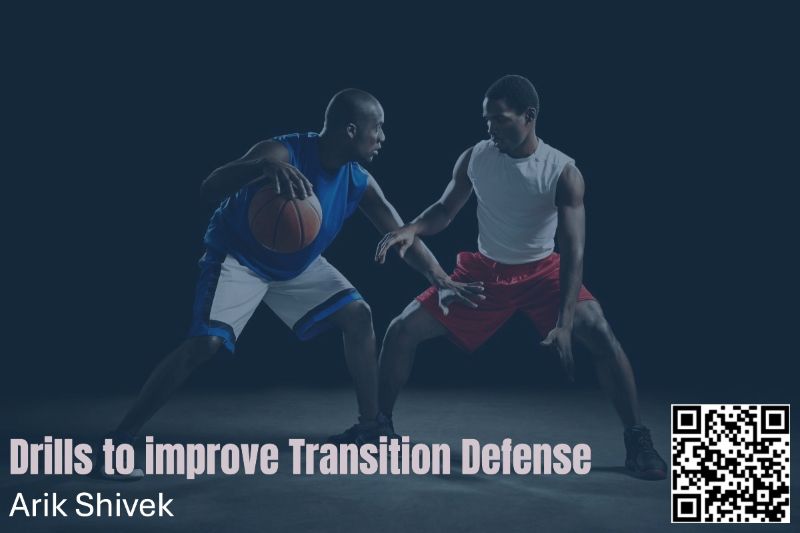
Drills for improving transition defense – Arik Shivek

$ 6.99

Number of Drills: 12

Description

Description

The main focus is on transition defense, which starts from offense. Key principles include:

  1. Shot selection – Good shot selection leads to better transition defense after a made or missed shot.
  2. Offensive rebounding – Sending 3-4 players to offensive rebound can help transition defense, as long rebounds lead to fast breaks.
  3. Sprinting back on defense – Players must sprint back on defense immediately after a shot, not resting after scoring.
  4. Communicating and covering the ball – Defenders must communicate who has the ball and cover the outlet pass to stop fast breaks.
  5. Keeping the ball on one side – Forcing the offense to one side of the court limits their passing options in transition.

The speaker demonstrated various drills to ingrain these principles, emphasizing the importance of correcting mistakes and building good habits, even for young players. He also discussed adapting to different player numbers and situations that can arise during practices.

Drills

  1. One-on-One Continuous Outlet & Sprint Back
  2. Two-on-Two Transition & Matchup Communication
  3. X-Drill (Closeout & Conditioning)
  4. 2-on-1 Plus 1 (Coach-Controlled Timing)
  5. 2-on-1 to 2-on-2 Communication & Rotation
  6. Sprint Back & Mismatch Awareness (1-on-1)
  7. 3-on-3 Full Court “Until You Score”
  8. 4-on-3 Plus 1 (Touch Coach and Join)
  9. Follow Above the Rim & Whistle-Triggered Transition
  10. Baseline Touch & Sprint Back Trigger
  11. 5-on-5: Two Passes, Shot, 3 Crash & 2 Sprint Back
  12. Three Possession Game (Set–Transition–Set)

Detailed Summary

Key Topics

  1. Transition Defense
    • Importance of controlling defensive rebounds and sprinting back on defense
    • Preventing fast breaks and limiting opponent's scoring opportunities
  1. Shot Selection and Offensive Rebounds
    • Emphasis on good shot selection and managing offensive rebounds
    • Strategies for maximizing three-point shot attempts and offensive rebounding opportunities
  1. Communication and Teamwork
    • Importance of communication and coordination among players on defense
    • Recognizing and reacting to mismatches and defensive situations
  1. Drills and Coaching Strategies
    • Variety of drills and exercises to develop transition defense skills
    • Adapting and improvising drills based on the number of available players

Insights and Takeaways

  1. Transition defense is a crucial aspect of the game, and it starts from the offensive end. Controlling defensive rebounds and sprinting back on defense can significantly impact the outcome of a game.
  2. Shot selection and managing offensive rebounds are important factors in transition defense. Emphasizing good shot selection and maximizing three-point shot attempts and offensive rebounding opportunities can help teams gain an advantage.
  3. Communication and teamwork are essential for effective transition defense. Players need to communicate and coordinate their actions to prevent fast breaks and react to defensive situations.
  4. Coaches should be adaptable and creative in designing drills and exercises to develop transition defense skills. Improvising and adjusting drills based on the available players can help ensure effective practice sessions.

Conclusions

  1. Transition defense should be a primary focus in team practices and game planning. Coaches should emphasize the importance of controlling defensive rebounds, sprinting back on defense, and preventing fast breaks.
  2. Developing good shot selection and managing offensive rebounds should be a key part of the team's offensive strategy. Encouraging players to take high-percentage shots and maximize their opportunities for offensive rebounds can contribute to successful transition defense.
  3. Fostering effective communication and teamwork among players is crucial for implementing successful transition defense. Coaches should prioritize drills and exercises that promote coordination, recognition of defensive situations, and appropriate reactions.
  4. Coaches should be adaptable and creative in their approach to transition defense training. Adjusting drills and exercises based on the available players and the team's specific needs can help ensure that players develop the necessary skills and habits.

Overall, the emphasis on transition defense, shot selection, communication, and adaptability in coaching strategies can lead to improved team performance and increased success in competitive basketball.

Scroll To Top
Close
Close
Close

My Cart

Shopping cart is empty!

Continue Shopping

Select at least 2 products
to compare